
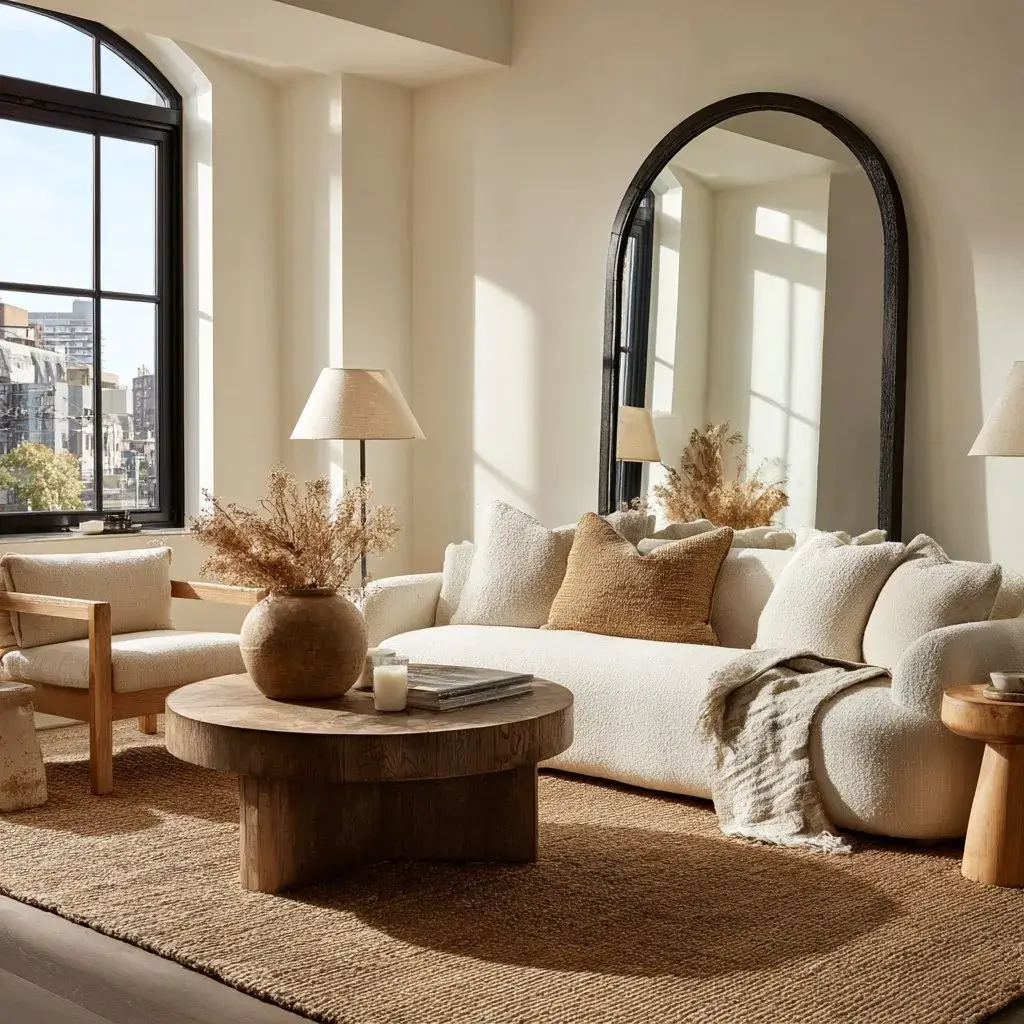
When you're ready for a new coffee table
Focus on the proportion math, not just the style.
Buying a coffee table because it looks beautiful, only to realize it looks lost next to a large sectional — or blocks the walkway entirely.
A coffee table that scales perfectly to your primary sofa — proportioned to create visual balance, not just fill space.
The sweet spot is ½ to ⅔ of your sofa's length (50–67%). It should also sit 1–2 inches lower than the sofa seat. This creates perfect visual balance and ensures everyone can reach their coffee cup.
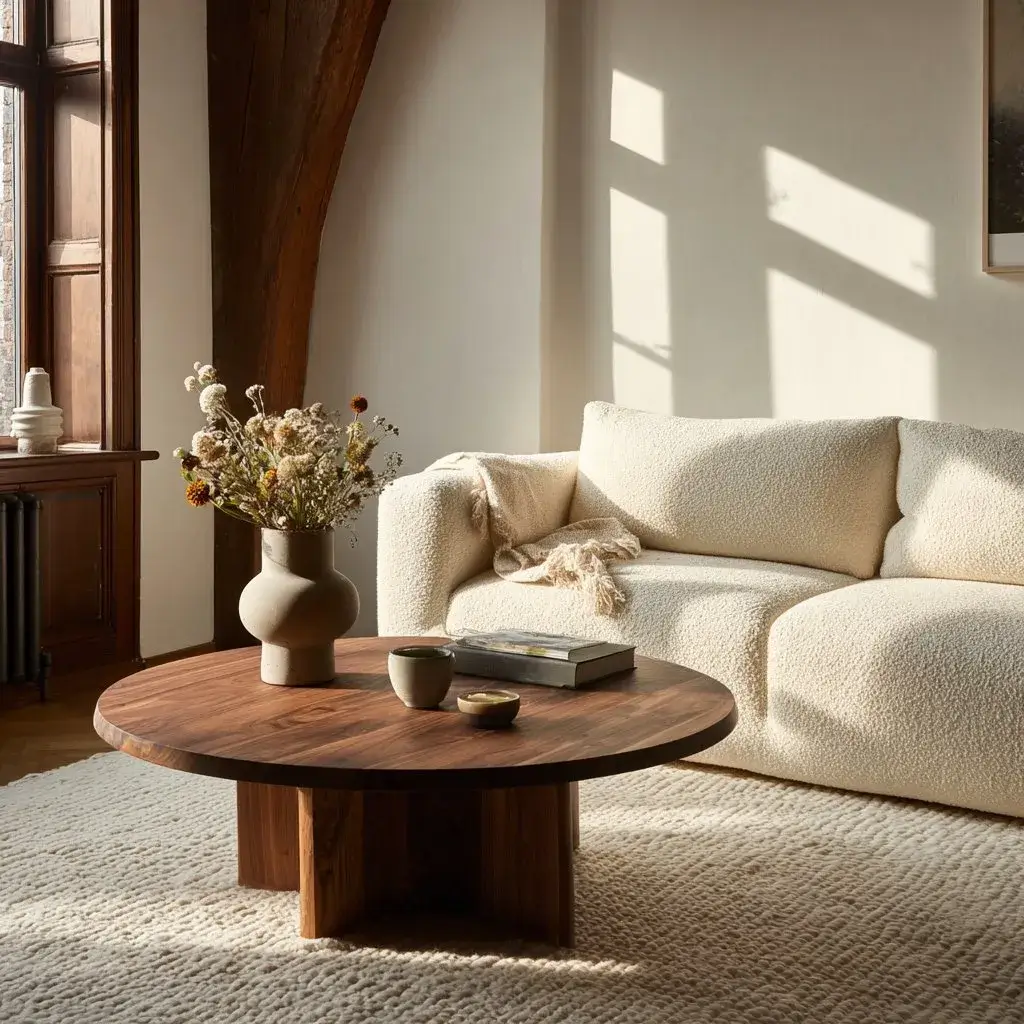
Proportion done right. The round walnut table sits at roughly two-thirds the sofa length — visually balanced, easy to reach.
When it's time to replace your area rug
Focus on anchoring the room, not just decorating the floor.
Buying a standard 5x7 rug for a full-sized living room. It floats under the coffee table, making the room feel smaller than it is.
A room-anchoring rug that connects your furniture — large enough that all seating pieces share the same visual foundation.
The front legs of all seating pieces should rest comfortably on the rug. Aim for a rug that extends at least 18–24 inches beyond the sides of your sofa. When in doubt, always size up.
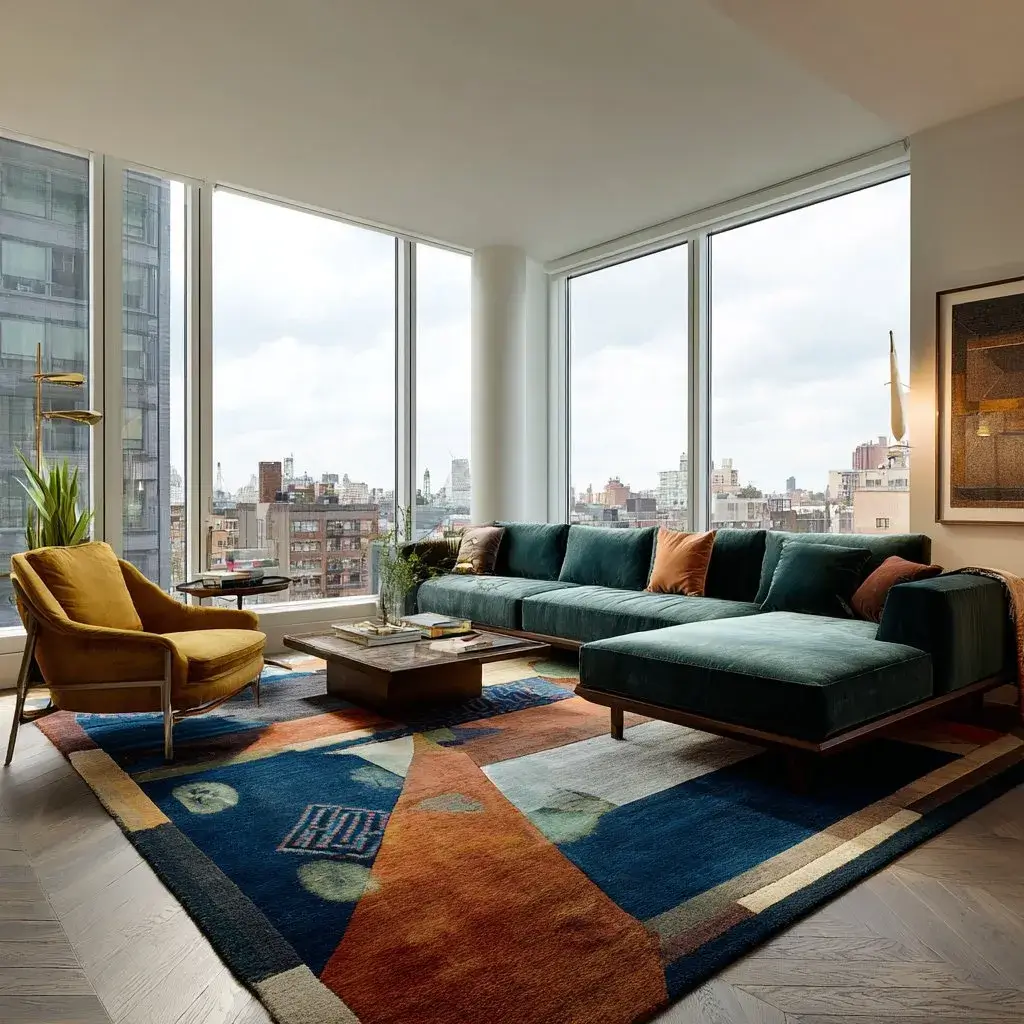
A room-anchoring rug. The front legs of every seating piece rest on it — no floating, no shrinking.
When you are shopping for a statement mirror
Focus on what it reflects, not just where it fits.
Hanging a mirror on an empty wall — only to end up with a beautiful frame reflecting a blank ceiling or the back of a door.
A strategically placed mirror that acts as an additional light source and multiplies a carefully considered view.
Mirrors multiply what they reflect. Position directly opposite a window to bounce natural light, or lean a floor mirror to reflect a styled corner. Make sure what it's reflecting is worth multiplying.
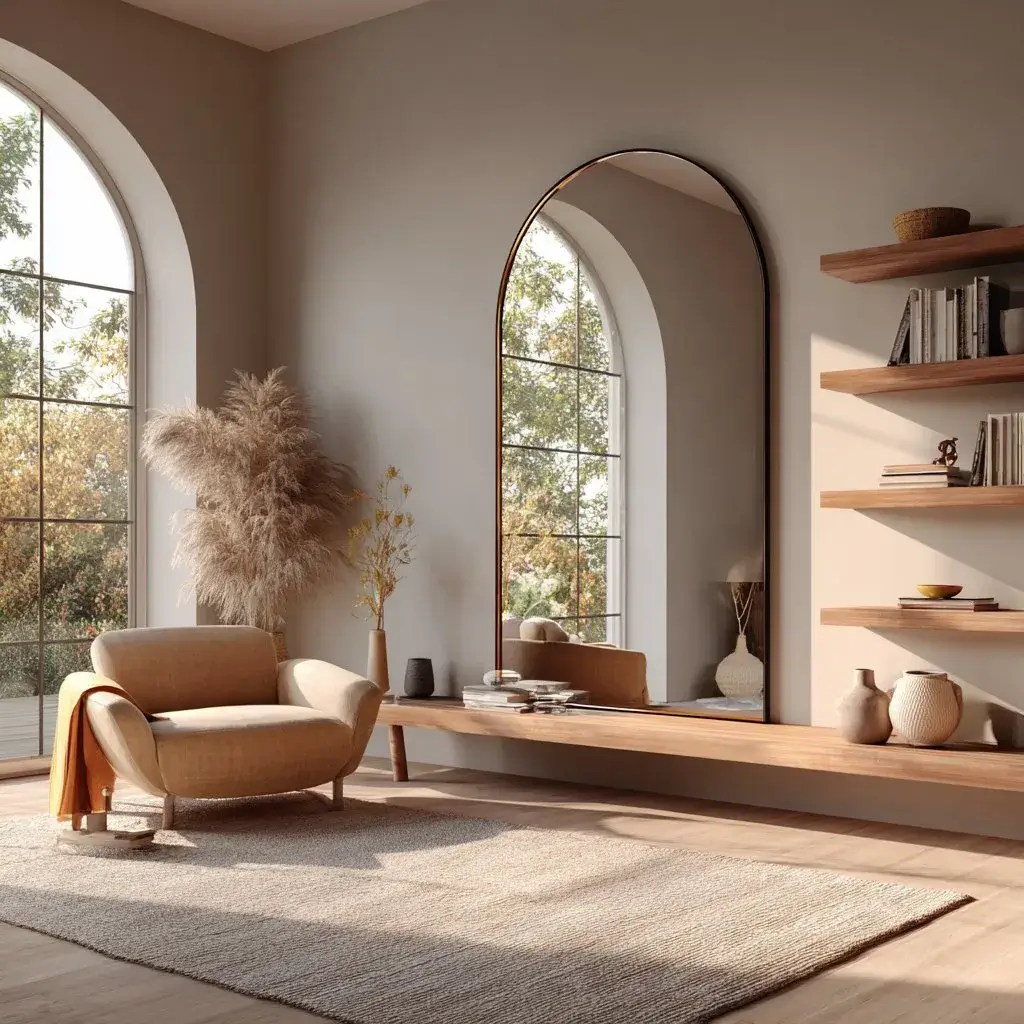
Position your mirror to reflect something worth multiplying. Here: an arch window, autumn light, and open sky.
When your throw pillows go flat
Focus on tactile materials, not just trendy patterns.
Replacing flat polyester pillows with more of the same. They look fine in the store but lose their shape the moment you sit down.
Pillows that introduce layered, tactile materiality — fewer pieces, but ones that actually hold their form and feel.
The way your room feels to the touch matters as much as how it looks. Choose covers in warm suede, heavy linen, chunky textured fabric, or velvet. One quality textured pillow does more for a sofa than six flimsy ones. Buy fewer, but buy better.
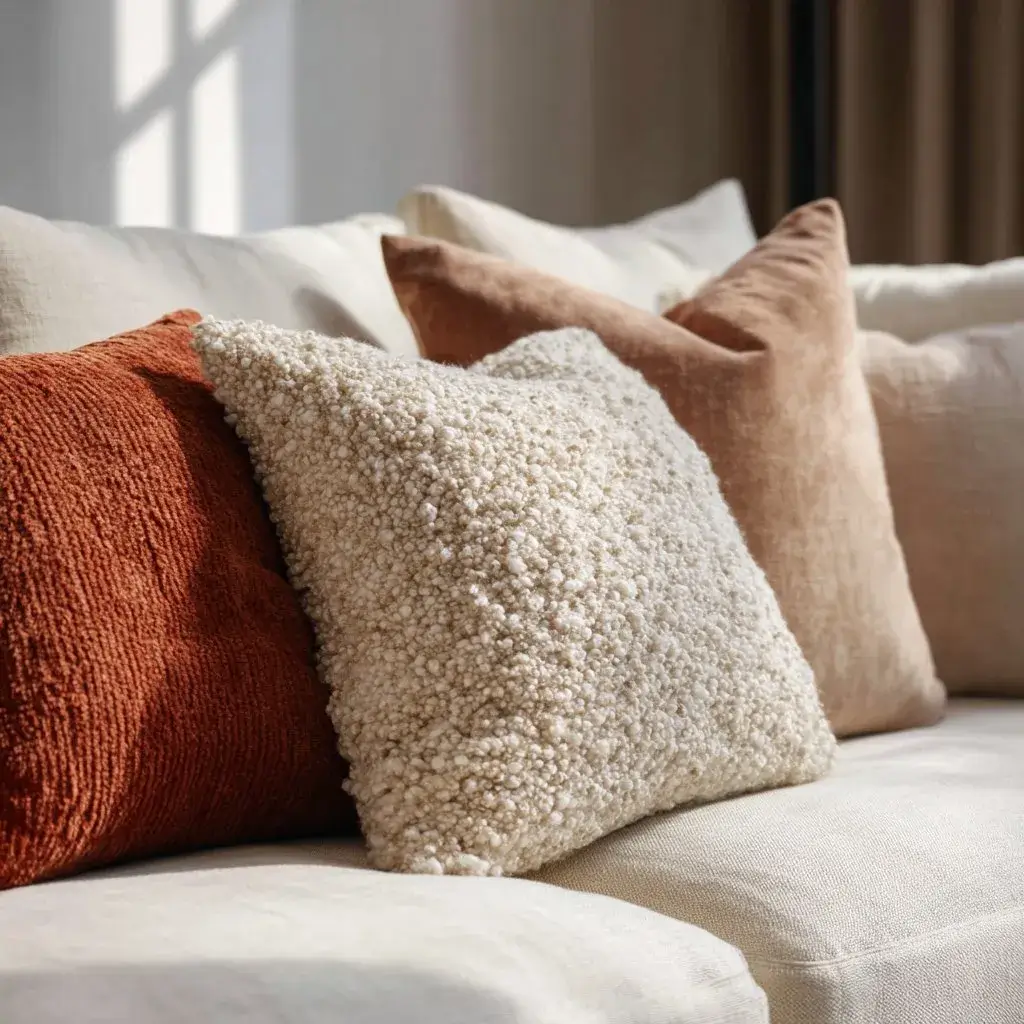
One boucle, one ribbed terracotta, one soft suede. Three materials. More impact than six flat polyester ones.
When you want to update your room's lighting
Focus on adding layers, not just changing the ceiling bulb.
Relying on a single overhead ceiling light. It flattens the room, casts harsh shadows, and makes the space feel like a waiting room.
Layered lighting that creates depth, warmth, and atmosphere — multiple sources working together at different heights.
Never design lighting in singles. Budget for three light sources in every room: a sculptural floor lamp in one corner, a table lamp on a side table, and wall lights or overhead as the ambient layer — not the only layer.
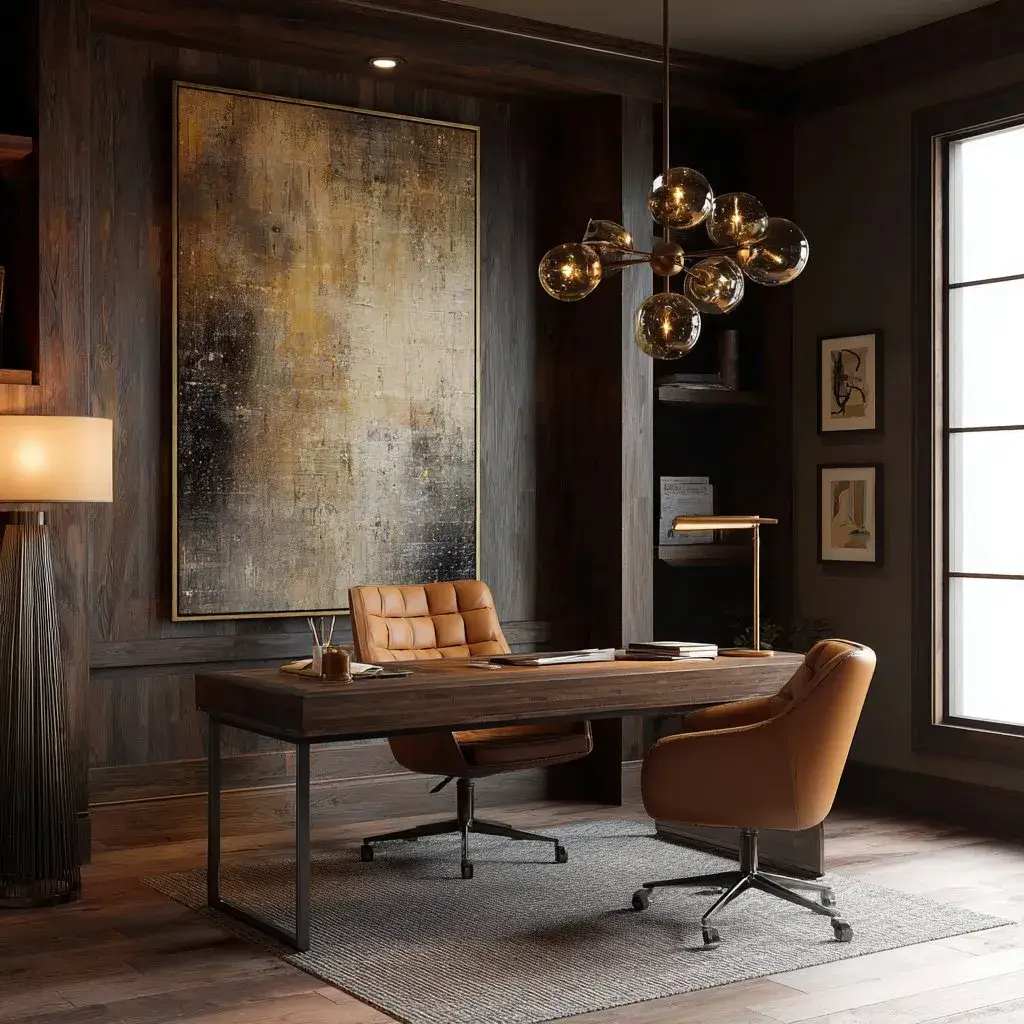
Three light sources, three heights. Never design lighting in singles.