

The Minimalist and the Maximalist
One of you finds empty surfaces restful. The other finds them cold. One sees a shelf with three carefully chosen objects. The other sees a shelf that isn't finished yet.
The minimalist isn't wrong. The texture-lover isn't wrong. They're responding to the same space with genuinely different nervous systems. The goal isn't to convert either person. It's to design a room where both people feel genuinely at home.
Texture Over Objects. Visual clutter comes from too many shapes, not too many materials. A room can feel deeply rich and layered while remaining visually calm — if the richness lives in how things feel rather than how many things there are.
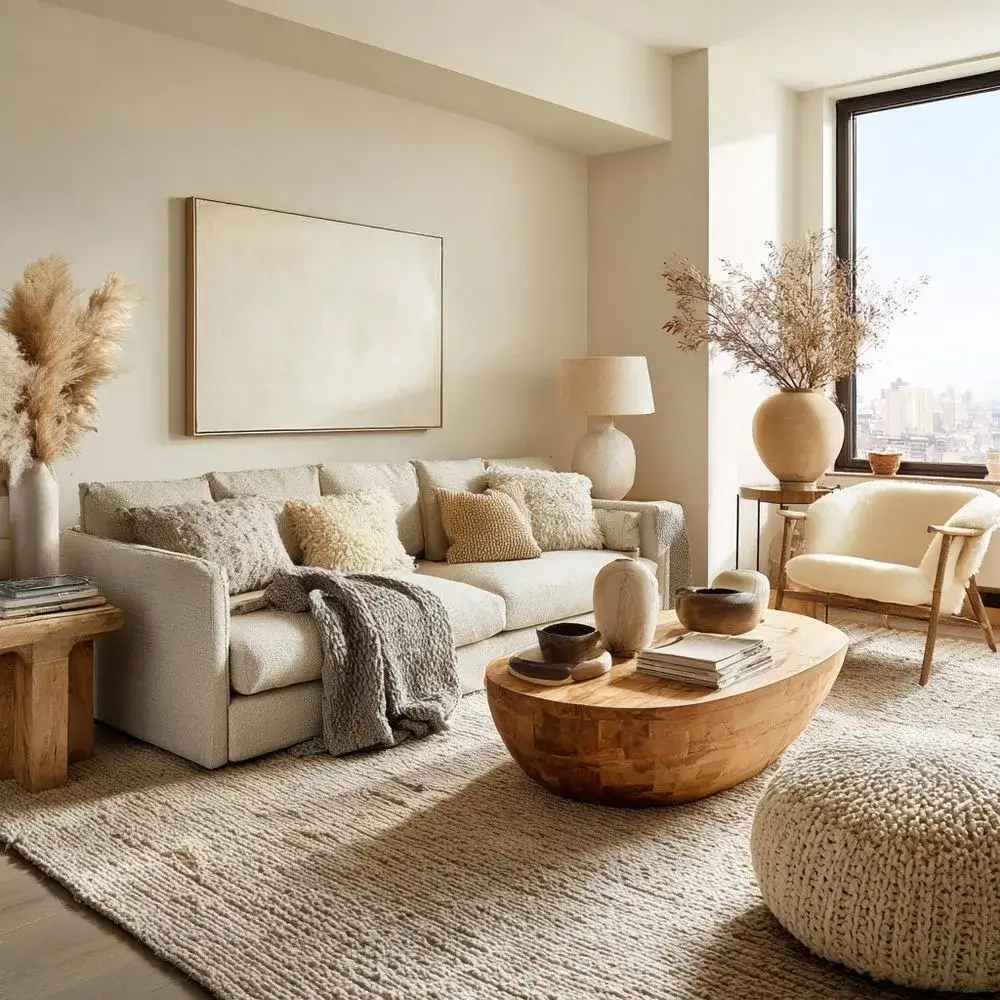
Rich in texture. Calm in objects. Both people can settle here.
"Keep the clean, minimal layout but make the room feel warmer and more tactile. Add texture through materials — chunky textured cushions, a jute rug, a ceramic lamp — without adding more objects or visual clutter."
The Colour Lover and the Neutral Purist
One of you lights up at a deep terracotta wall or a rich forest green kitchen. The other feels low-level anxiety at the mere suggestion of colour on a wall.
The colour-lover feels like they're being asked to live in a hospital. The neutral-lover feels like the colour-lover wants to live in a painting. Both feelings are valid. Neither is a design solution.
The 60-30-10 Rule. 60% of the room in a dominant neutral. 30% in a soft secondary tone. 10% in a bold accent colour. The accent gets to be genuinely bold precisely because it's contained.
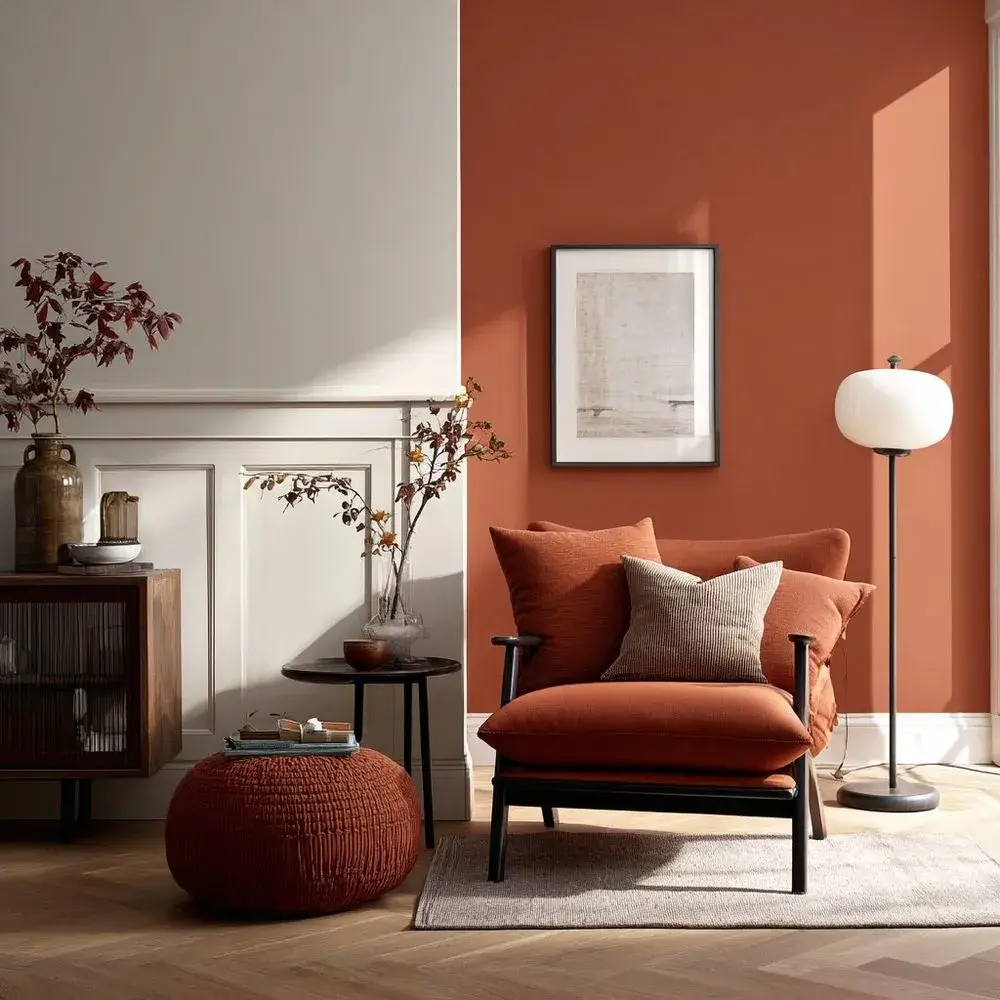
The bold wall earns its place. Everything else stays calm.
"Apply the 60-30-10 colour rule to this room. Keep the walls mostly neutral but introduce a bold terracotta accent on one wall behind the reading chair. Add a terracotta accent chair in the corner. Use the same terracotta as a 10% accent in the cushions and one piece of art. Keep everything else in warm neutrals."
The Collector and the Minimalist — Ages 8 and 11
One child wants every surface to reflect who they are. The other cannot focus or sleep in visual noise. The problem isn't the children — it's that the room hasn't been designed to hold two genuinely different people.
Zone Sovereignty. The framework — floor colour, ceiling, one shared wall tone — creates visual unity. Everything within each zone belongs entirely to the person who lives there.
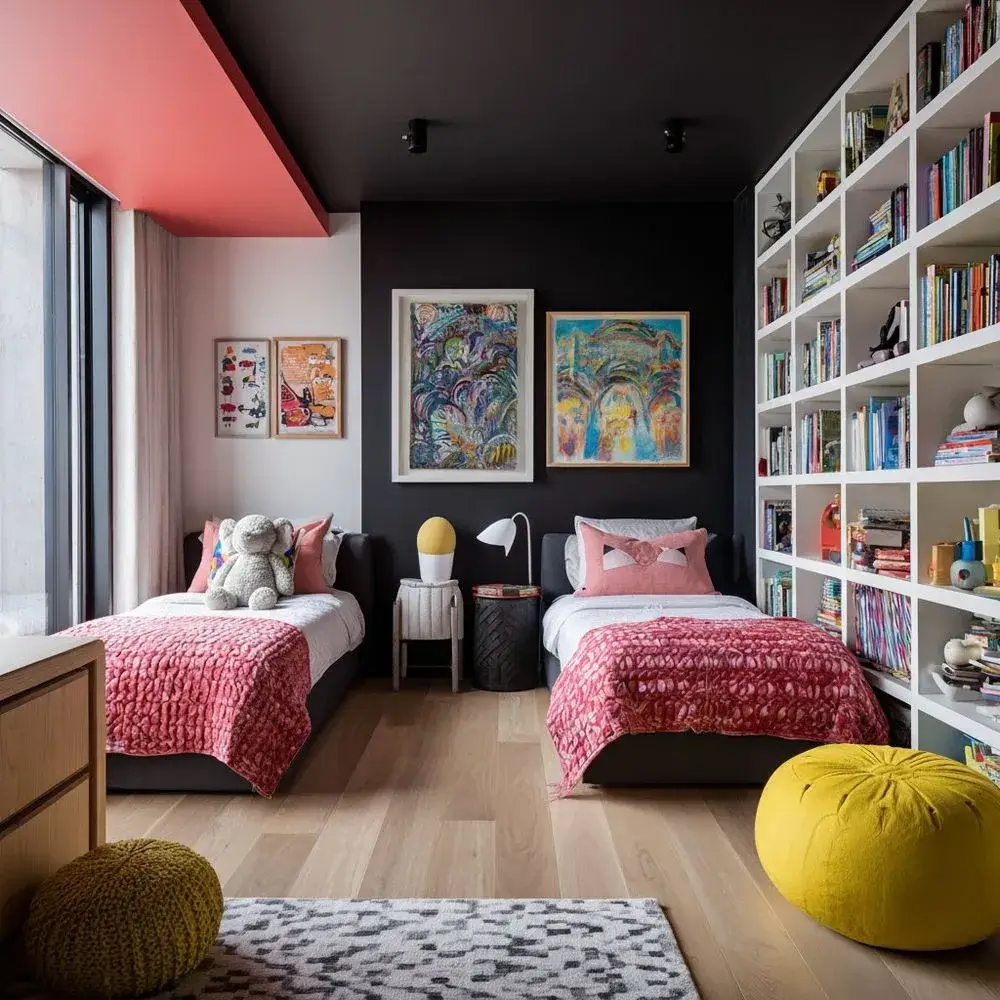
Same room. Two worlds. Neither child asked to be different.
"Design a shared bedroom for two children with completely different styles. One side maximalist and colourful — a collector's space with room for display. The other side calm and minimal. Each zone clearly belongs to one child."
The Established Space and the Late Arrival
You moved into someone else's home. Their furniture. Their aesthetic. Their carefully chosen version of a living room. You have a few boxes of your own things and a quiet, polite feeling that this space will never quite feel like yours.
This is one of the loneliest design problems in shared living — and one of the most solvable.
Layer, Don't Replace. Work with soft, layerable elements first — a rug laid over the existing one, art on a previously empty wall, a throw in your colour on an already-present sofa. These additions don't require removing someone else's choices.
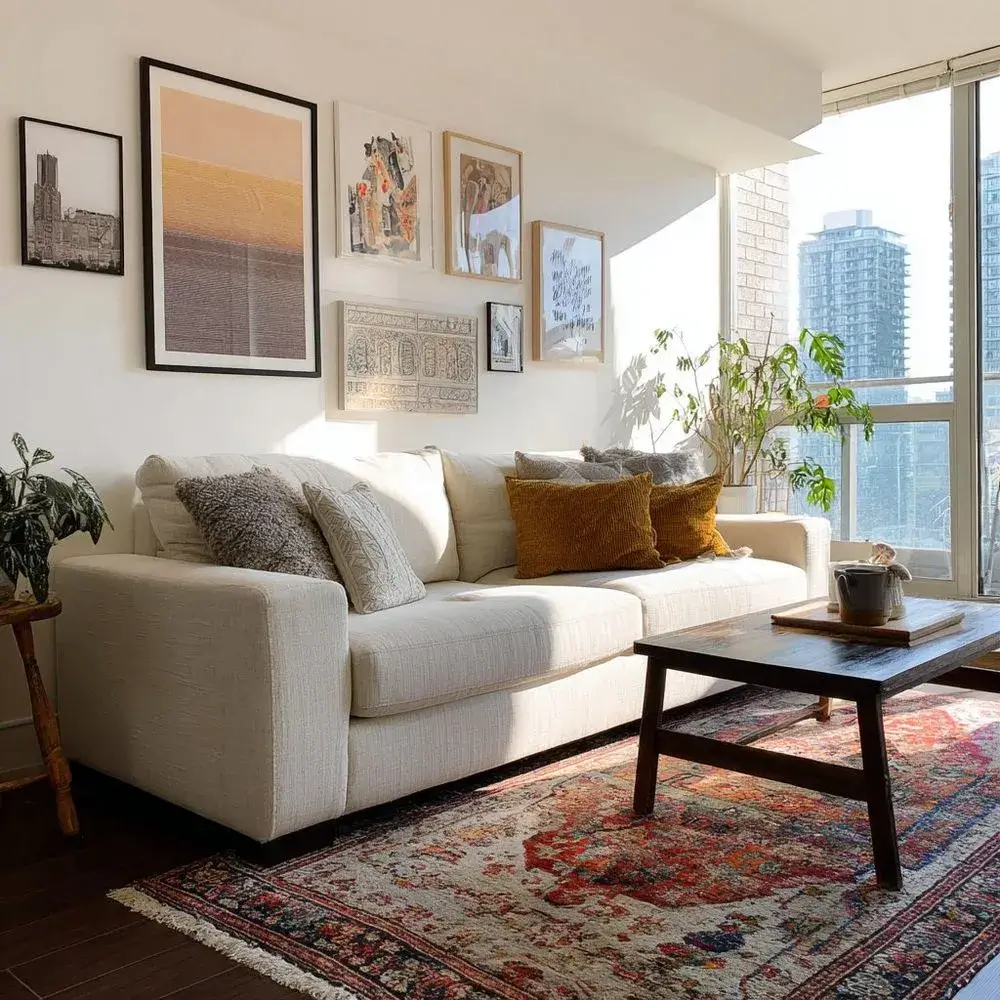
The sofa isn't theirs. The art is. The rug is. It's starting to feel like home.
"I've just moved into someone else's furnished apartment. Their style is neutral and minimal. My style is warmer with more colour and pattern. Show me how to layer my personality into this space without replacing or disrupting their existing furniture. I want to add: one rug, wall art on the left wall, one plant, and accent cushions."
The Nester and the Transient
One of you is building a home. The other is 'just here for a bit.' They don't see the point in investing in a space they'll leave in six months.
The solution isn't to make the transient care more. It's to show them that a home that looks intentional doesn't have to cost much, require commitment, or leave a single hole in the wall.
Portable Permanence. Rugs, floor lamps, freestanding shelving, removable art strips, plants, throws, and quality cushions transform a space completely — and move with you when you leave.
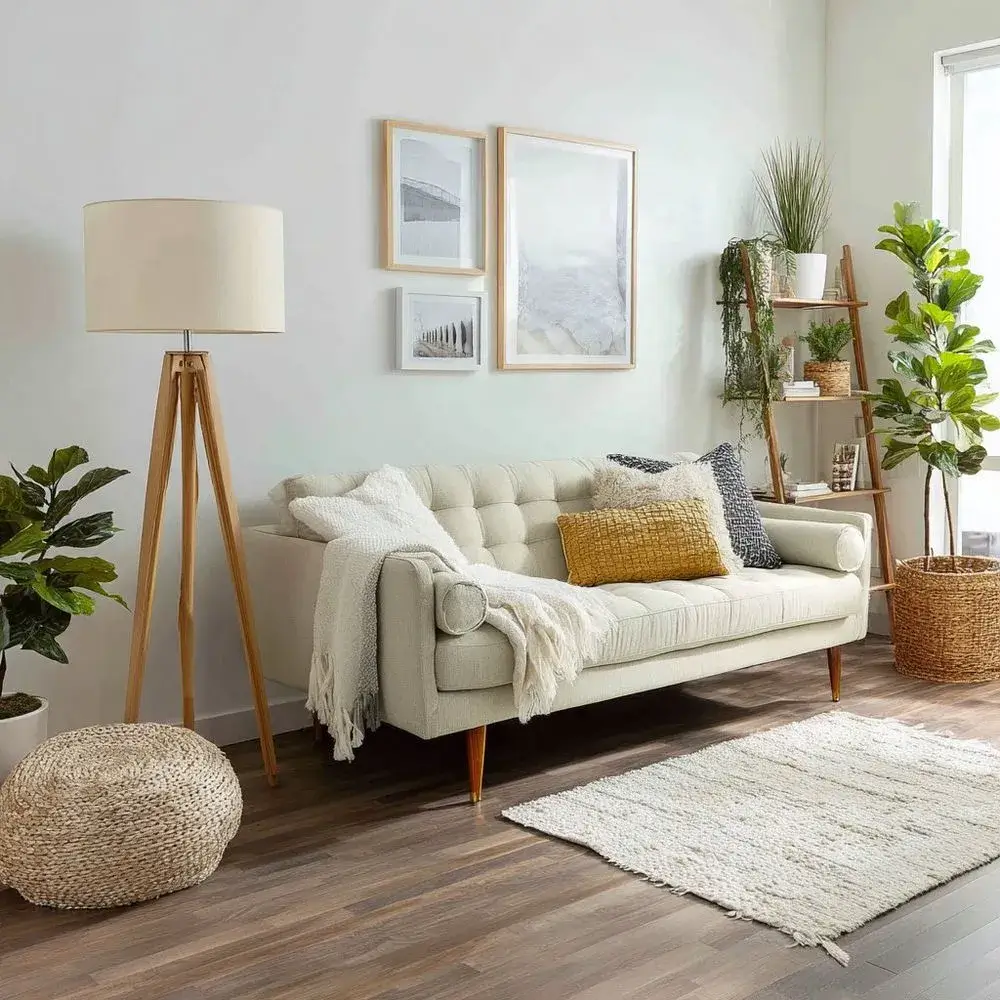
Nothing drilled. Nothing painted. Everything moveable. Still a home.
"Design a living room that feels warm and intentional but uses only portable, non-permanent elements — nothing that requires drilling or painting. Include a rug, floor lamp, freestanding shelving, removable wall art, plants, and cushions."